
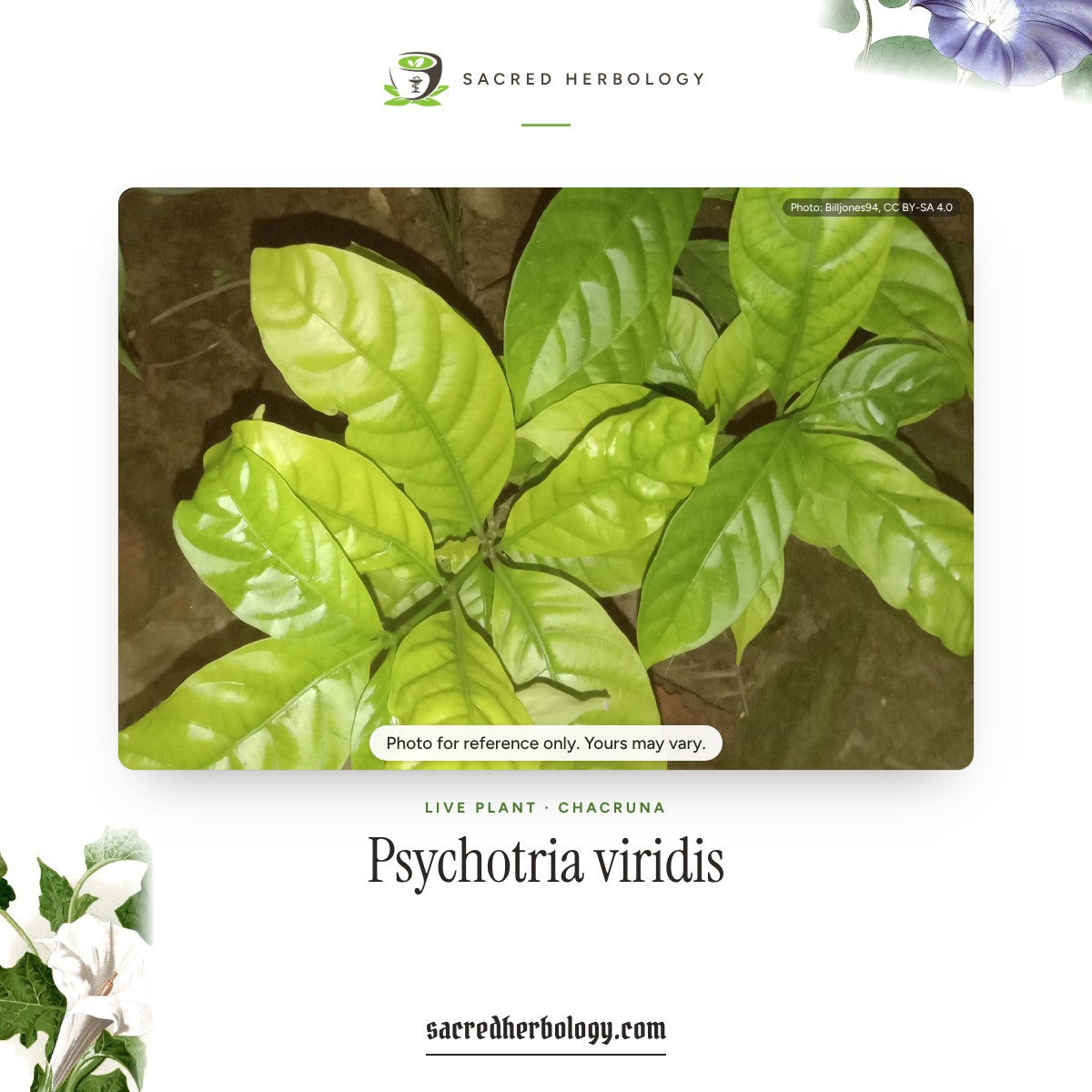
Psychotria viridis Ruiz & Pav., chacruna. Live plant. Family: Rubiaceae | Origin: Amazon Basin
A glossy-leaved understory shrub from the Amazon rainforest, prized by botanical collectors and ethnobotanical researchers for its rich cultural history, ornamental foliage, and place in the Rubiaceae family alongside coffee. Psychotria viridis is a slow-growing, humidity-loving evergreen suited to warm, protected positions in tropical and subtropical gardens, or to greenhouse and indoor cultivation further south.
Strains available:
-
Nexus — compact growth habit, dense leaf set
-
Shipibo — vigorous, broader leaf, traditional lineage
-
UDV — upright habit, strong branching structure
Specimen sizes:
-
Rooted cutting (10–15 cm) — establishing stock for propagators
-
Advanced potted specimen (40–60 cm, 2 L pot)
-
Mature specimen (1 m+, 5 L pot) — limited availability
Grown by our own hands. Every plant in this listing is grown by the Sacred Herbology team. Frater Leo Viridis raises each one himself, from the mother plant and the cutting through rooting and potting to the day it leaves for the post. He feeds them well, and he tends them the way an esoterist tends anything given to the Work, with attention to the planetary hour, the Moon and the intention behind each cutting. That care goes into the pot with the plant.
What you receive: a nursery-grown, disease-checked live plant in an appropriately sized pot, with a copy of this care guide.
Important notice: Psychotria viridis is sold strictly as a botanical/horticultural specimen for cultivation, collection, and ornamental purposes. It is not sold, described, or intended for human consumption, extraction, or preparation of any kind. Laws governing the possession and cultivation of this species and its natural constituents vary by state and territory in Australia and by country. It is the purchaser’s sole responsibility to confirm the legal status of this species in their jurisdiction before ordering. We do not provide advice on, and cannot be held responsible for, any use of this plant outside of horticultural cultivation and display.
Cultivation Care Guide
Climate and Position
Psychotria viridis is a tropical rainforest understory plant. It wants warmth, humidity, and filtered light rather than direct sun.
-
Temperature: 18–30°C ideal; protect from anything below 12°C. Frost will kill it outright.
-
Light: Bright, indirect light or dappled shade. Direct midday sun scorches the leaves. Indoors, an east-facing window or a spot 1–2 m back from a bright window works well.
-
Humidity: 60%+ preferred. In dry indoor air, group with other plants, use a pebble tray, or run a humidifier. Misting helps but isn’t a substitute for ambient humidity.
-
Outdoor suitability: Frost-free tropical and subtropical zones only. Elsewhere, treat as a protected patio or greenhouse plant that comes indoors for winter.
Soil and Potting
-
Mix: Free-draining, rich in organic matter — a good aroid or rainforest mix works well (e.g. orchid bark, perlite, coco coir, and quality potting mix in roughly equal parts).
-
pH: Slightly acidic, around 5.5–6.5.
-
Pot: Always use a pot with drainage holes. Terracotta helps prevent waterlogging in humid climates; plastic retains moisture better in drier ones.
-
Repotting: Every 12–18 months, or once roots circle the base of the pot. Size up gradually — this species doesn’t like being over-potted.
Watering
-
Keep soil consistently moist but never waterlogged. Allow the top 2–3 cm to dry between waterings.
-
Reduce frequency in cooler months when growth slows.
-
Use rainwater or filtered water where possible — sensitive to salt and chlorine buildup, which shows as leaf-tip browning.
-
Yellowing lower leaves usually signal overwatering; crispy brown edges usually signal underwatering or low humidity.
Feeding
-
Feed monthly during active growth (spring–summer) with a diluted balanced liquid fertiliser (half strength).
-
Reduce or stop feeding in cooler months.
-
Occasional worm castings or compost tea supports steady, even growth.
Light Pruning and Shaping
-
Pinch growing tips to encourage bushier growth.
-
Remove any yellowed, damaged, or diseased leaves promptly.
-
Light structural pruning is best done in spring as new growth begins.
Propagation
-
Semi-hardwood cuttings taken from healthy stem sections root reasonably well in a humid propagation environment (propagator box or clear bag over the pot).
-
Use a rooting hormone gel and a free-draining, moisture-retentive medium.
-
Bottom heat (22–26°C) and consistently high humidity significantly improve strike rates.
-
Rooting is slow — expect 4–8 weeks before new growth confirms success.
Common Issues
|
Symptom |
Likely Cause |
|---|---|
|
Yellow leaves, soft stems |
Overwatering / poor drainage |
|
Brown, crispy leaf edges |
Low humidity or salt buildup |
|
Leaf drop after moving location |
Transplant/environmental shock — normal, allow time to settle |
|
Slow or stalled growth |
Insufficient light or temperatures too low |
|
Sticky residue, small pests on new growth |
Scale or mealybug — treat with diluted horticultural oil |
Pests and Disease
Generally untroubled if humidity and airflow are managed well. Watch for scale, mealybug, and spider mite, particularly in dry indoor conditions. Treat early with insecticidal soap or horticultural oil, and improve airflow to prevent recurrence. Root rot is the main disease risk and is almost always a drainage/overwatering issue rather than a pathogen problem — correcting the growing medium and watering routine usually resolves it.
Seasonal Notes
-
Spring/Summer: Active growth phase. Increase watering and feeding accordingly.
-
Autumn/Winter: Growth slows markedly. Ease off water and feed, and ensure the plant is protected from any cold snaps.
This guide covers horticultural care only. Psychotria viridis is provided as a live botanical specimen for cultivation and collection purposes.
Reviews
There are no reviews yet.